Virus threatens Chinese traditions of chopsticks and family-style meals
Advertisement
Experiences
Virus threatens Chinese traditions of chopsticks and family-mode meals
China'southward authorities is promoting using serving utensils to help adjourn spreading the coronavirus, but resistance is strong – sharing food with personal chopsticks is i manner Chinese people express intimacy.
(Photo: Pexels)
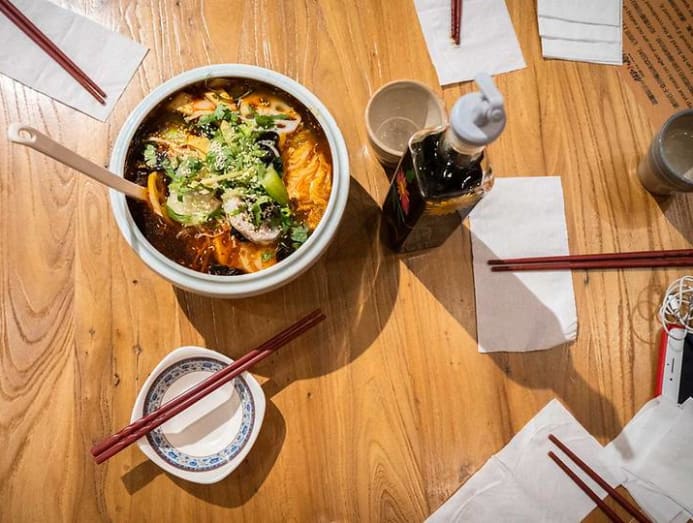
At Chilli Kitchen in Beijing, spicy and oral cavity-numbing Sichuan dishes are laid out family-mode. Using cherry chopsticks, diners dive into steaming bowls of pork wontons bathed in fragrant chili oil and sesame seeds, and rummage through platters filled with dried red chili peppers to unearth juicy bits of roasted fish.
READ> 10 Sichuan hotpot hotspots in Singapore
Sharing food is a cardinal characteristic of how Chinese people, like many elsewhere in the world, convey affection. Parents choice up choice morsels and place them in their children's bowls equally an expression of beloved; children serve their grandparents to show their respect; and bosses do it as a gesture of magnanimity toward their employees.
Now, concerns are growing that the state'south long tradition of sharing nutrient could also accelerate the spread of the coronavirus. The government has zeroed in on a ubiquitous utensil: Chopsticks.
Nigh Chinese diners pick up food from communal platters with the same pair of chopsticks that they and then use to eat, or serve others. Double dipping is the norm. Just the government hopes to change habits by urging people to use a second pair of chopsticks – only for serving.
State news agencies are calling it a "dining table revolution." Dr Zhong Nanshan and Dr Zhang Wenhong, outspoken infectious disease experts who take get celebrities since the start of the outbreak, take voiced their support. Authorities beyond the country are running advertisements with slogans like, "The altitude between you and civilised dining is just ane pair of serving chopsticks."
Some restaurants and diners have heeded the phone call. They are offering discounts to diners who employ serving chopsticks. In the eastern Chinese city of Hangzhou, more than 100 prominent restaurants have formed a "Serving Chopsticks Brotherhood."
In Beijing, Bai Yiwen, i of the owners of Chilli Kitchen, reckons that since reopening in mid-April, more than than half the groups that come to his restaurants take asked for serving chopsticks, up from less than five per cent before the pandemic.
"Before, people felt similar using serving chopsticks was bothersome," Bai, 31, said. "But now, everyone is becoming more aware of the trouble and slowly they are getting used to information technology."
READ> Singapore's top chefs pick their favourite bell-ringer food takeaways and deliveries
AN EXPRESSION OF COMMUNAL Culture
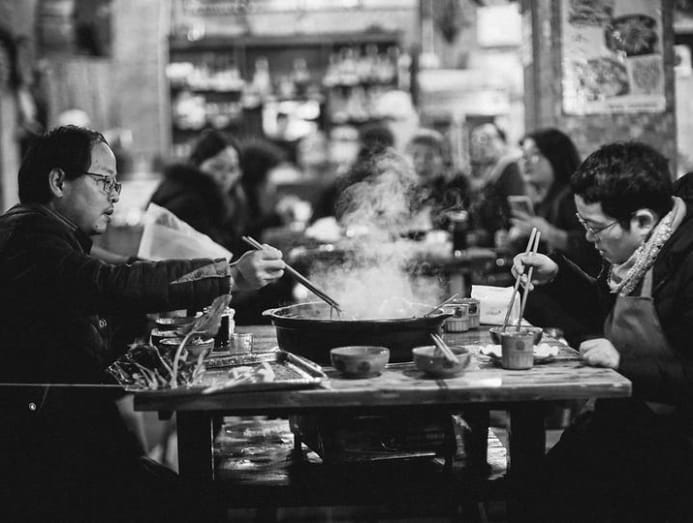
Even so, resistance is strong. Many see sharing food with one'due south own chopsticks as among the most authentic expressions of Cathay'south communal culture and emphasis on family, no less integral than hugging is to Americans or the cheek kiss is to the French. Serving chopsticks are typically associated with formal settings, like banquets and meals with strangers.
Serving chopsticks are more mutual in major cities similar Beijing and Shanghai, where there is a greater sensation of hygiene. Some Chinese who hail from north of the Yangtze River see their southern, rice-eating counterparts as more particular about their eating habits, so more likely to use serving chopsticks. (In that location is no bear witness supporting this stereotype.)
By contrast, wheat-eating northerners, and particularly the men, take pride in what Chinese call "eating large and drinking big," without treat such footling concerns as germs and bacteria. Never listen a small, recent experiment by government experts who found that the level of bacteria in dishes for which serving chopsticks were used was equally piddling as 0.four per cent the level of dishes shared in the regular mode.
Liu Peng, 32, an educational activity consultant and proud northerner from the littoral urban center of Qingdao, said that while he had grown accustomed to wearing a mask in recent months, he and his friends had non inverse their dining habits.
"Maybe using serving chopsticks is more hygienic just eating is the time for usa all to relax, and we don't want to exist bothered past all these picayune rules," Liu said.
Besides, he reasoned, the new coronavirus was so contagious that serving chopsticks were non going to stop the virus from spreading effectually a table.
"In my 30 years of eating out, I've never contracted an infection," he alleged.
ELSEWHERE IN ASIA
Similar campaigns to promote serving chopsticks were launched beyond Asia after the outbreak of astringent acute respiratory syndrome, or SARS, in the early 2000s.
The bulldoze gained traction in Hong Kong, where almost 300 people died in that outbreak. Even today, many restaurants in Hong Kong lay two sets of chopsticks at each place setting, one pair for serving and another, often a unlike-coloured pair, for eating. Other restaurants in the urban center frequently place serving spoons and chopsticks directly on the dishes.
Just the campaign barely registered in cathay. Well-nigh Chinese abound upwards learning the basics of chopstick etiquette: Concord them two-thirds of the way up; don't stick them vertically into your rice bowl because information technology resembles incense offerings for the deceased; and don't suck on them.
Sharing nutrient with family unit and friends is just as deeply ingrained, and serving chopsticks are sometimes seen every bit undermining that expression of closeness. Just asking for the actress utensils tin exist awkward because it could imply that yous think your boyfriend diners might be unwell.
Sara Jane Ho, a Hong Kong native and founder of a loftier-end etiquette school in Red china, said that when she hosts a repast, she often says she has a modest common cold then she can ask for serving chopsticks to protect everyone else from her.
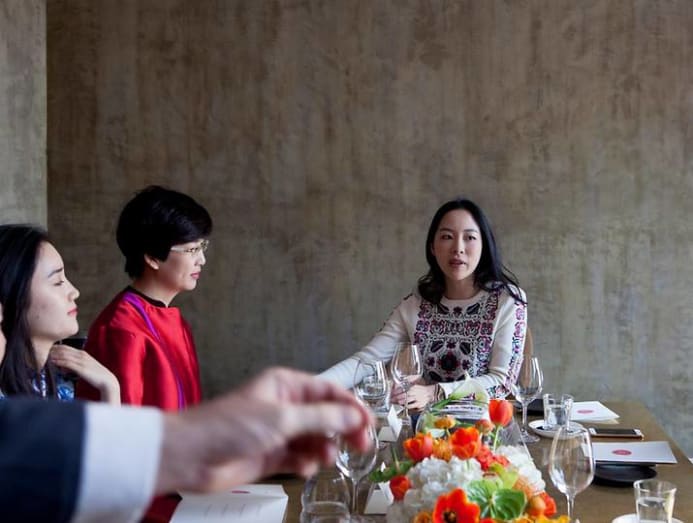
But fifty-fifty then, she said, compliance is not guaranteed.
"Often y'all'll see people serving themselves and then they forget to switch chopsticks and start eating directly with the serving pair," Ho said. "It ever gives me a mini heart attack."
HISTORICAL PRECEDENTS
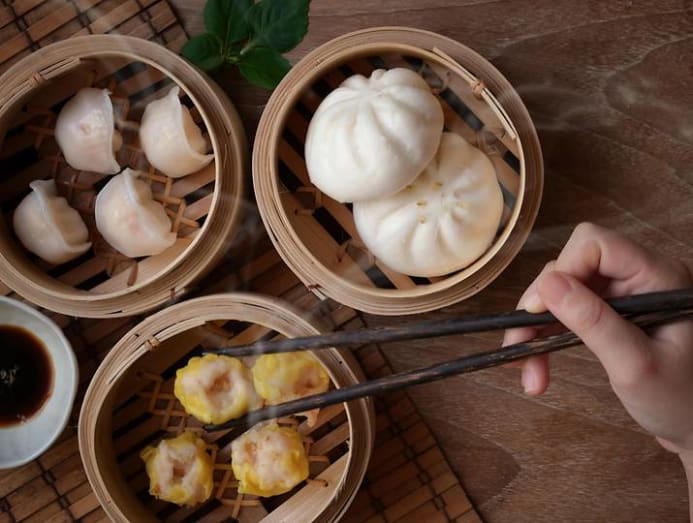
To brand the government'south case, state media and culinary historians have scoured Chinese history to find instances in which serving chopsticks or individual plating was the norm. For three,000 years up until the Tang Dynasty, news reports say, Chinese people ate dissever portions of food. The articles indicate to the famous 10th-century curl painting, The Night Revels of Han Xizai, which depicts a government government minister and his guests eating individually plated portions of food.
The cause was taken upwards by Wu Lien-teh, a Chinese doctor from British Malaya, who is often credited with saving many lives during the 1910 outbreak of pneumonic plague in northeastern China. Wu helped popularise the employ of serving chopsticks along with the utilize of a lazy Susan, the round rotating platform known in Chinese as the "aseptic tabular array."
Fifty-fifty erstwhile Communist Chairman Mao Zedong, who supposedly rarely bathed and never brushed his teeth, was at one point said to accept used serving chopsticks, thank you to the influence of the father of Mao's second wife, according to Zhao Rongguang, a Chinese food historian.
Merely the practice of sharing nutrient has withal persisted. In 1984, Hu Yaobang, and so full general secretary of the Communist Party and a passionate liberaliser, suggested that his countrymen abandon chopsticks and communal eating in favour of Western-style individual dining practices to avert contagious diseases. The idea was promptly ignored and forgotten.
Zhao, the historian, sees the coronavirus epidemic as an opportunity to revive the movement for "civilised dining."
"If we don't change this practice of 'using one pair of chopsticks to dig to the bottom' so we are going to be eliminated forever by humanity and natural selection," Zhao said.
Merely unless a specific law is enacted, changing habits will exist an uphill battle, peculiarly outside of the big cities.
For Shu Xiao, 27, a schoolteacher in Yuxi, a metropolis in the southwestern province of Yunnan, grouping dinners can be discomfiting. Shu said her family has used serving chopsticks at home since concluding year, when reports were circulating nigh a local outbreak of tum bacteria.
When she goes out to dinner with her friends, she can't muster the courage to ask for extra sets of chopsticks, she said. Instead, she tries to eat only from the parts of the dishes least touched by her companions and fights the urge to think about how much bacteria is being circulated around the tabular array.
"My friends already think my family is kind of strange for using serving chopsticks at home," she said. "Then I simply go along with the mainstream, fifty-fifty though in my heart I'grand always protesting a little."
Past Amy Qin © 2022 The New York Times
READ> After 19 years, China Lodge permanently shuts its doors, citing years of losses
Source: https://cnalifestyle.channelnewsasia.com/experiences/virus-threatens-chinese-tradition-of-chopsticks-251316
0 Response to "Virus threatens Chinese traditions of chopsticks and family-style meals"
Post a Comment